2025 Patrick Scott Prize Winner

The winner of the 2024 Patrick Scott Award for Best Graduate Paper has been announced:

Cailey Rogers, North Carolina State University

“‘A Downright Eve’: Rethinking the Creation Myth Through Lilith Figures in Jane Eyre

This paper seeks to explore how Charlotte Brontë’s Jane Eyre (1847) engages with the creation myth in its depiction of Jane as an autonomous Eve and subsequently complicate this reading by analyzing Bertha as a powerful yet ruinous Lilith figure. My research extends scholarship tracing back to Gilbert and Gubar (1979) and modernized by Nora Gilbert (2016) that reads themes of female resistance in Jane Eyre as revisionist allusions to the traditional, Miltonic Adam and Eve story and to folklore of the villainized Lilith archetype. This pattern of scholarship notably understudies Lilith—a problematized figure of alterity—as she relates to issues of race and gender in the paragon of imprisoned yet defiant women: Bertha Mason. I consider how Brontë affords Jane-as-Eve the freedom to rise above male domination as a white, Christian woman, but denies that same feminist empathy to Bertha-as-Lilith, who is dehumanized and scapegoated into a moral boundary for resistant women. This study finds that Brontë’s feminist revision of the creation myth grapples with gendered injustice and utilizes the Eve figure as a symbol of equality but also intertwines Bertha’s “otherness” as a racialized woman with her embodiment of the subversive Lilith. Jane’s Eve has been read as a symbol of female autonomy and deliverance, but I argue that Bertha also exerts agency in her embodiment of Lilith—not just as the ostracized first wife, but also through the condemnation she faces for her insubordination against normative patriarchal structures. In exploring the feminized dichotomies of good and evil in this text, this research fills a scholarly gap by using Bertha’s Lilith to rethink Jane Eyre’s parallels to Eve, engaging in a more inclusive and holistic reading of classic myths in Victorian literature.

Cailey Rogers is a second-year master’s student and graduate teaching assistant studying English literature at North Carolina State University. She graduated from Elon University with degrees in both journalism and English literature. As an undergraduate, Cailey was the recipient of the Lumen Prize which allowed her to write a thesis focused on feminist Victorian and Gothic literature. In graduate school, Cailey continues to pursue her passion for Victorian studies and hopes to complete more research on feminist rewritings of classic myths in Victorian literature as well as the postcolonial Gothic.

Congratulations, Cailey!

Continue Reading

2024 Patrick Scott Prize Winner

The winner of the 2024 Patrick Scott Award for Best Graduate Paper has been announced:

Johanna Bailie, University of Georgia

“‘The African Roscius’: Ira Aldridge’s Self-Presentation and Audience Reception”

Abstract: In 1833, Ira Aldridge, the first professional actor of African descent in Britain, performed as Othello for London’s storied theatre, Covent Garden, marking a significant moment in Aldridge’s long and acclaimed transnational career. This paper examines the distinctively negative reception to Aldridge’s Covent Garden performances publicized by contemporaneous theater critics, a reception that speaks to how Aldridge’s performances and self-presentation as a qualified Shakespearean actor challenged Victorian racial stereotypes about men of African descent and conjured racial anxieties for some London audiences. This paper argues that Aldridge worked to allay such racial anxieties and that he did so, in part, by expanding his repertoire, turning to alternative characters such as Fabian in The Black Doctor that projected more palatable versions of black masculinity for his white audiences. In performing as Fabian, Aldridge presented an alternative black hero who, unlike Othello, did not reinforce the stereotypes that black men are physical and sexual threats to white women. By taking on this role, Aldridge ventured to intercede in the racial imagination of the Victorian British public, promoting his theatrical work as both culturally liberalizing and non-threatening.

Johanna Bailie is a PhD candidate in English at the University of Georgia where she previously received both her Bachelor’s and Master’s degrees. She currently works as an instructor for the university’s First-Year Writing program, teaching courses that focus on literature and disabilties. Her research areas include 18th Century Literature, British Romanticism, Disability Studies, and Postcolonial Studies, and her intended dissertation will cover how theater across dramaturgical genres influenced the British abolitionist movement.

Congratulations, Johanna!

Continue Reading

2023 Patrick Scott Prize Winner

The winner of the 2023 Patrick Scott Award for Best Graduate Paper has been announced:

Alexandra Kadis, University of Maryland, College Park

“Japanese Acrobats as Athletes on the Victorian Stage: The Victorian Reception of Japanese Acrobatic Troupes, 1867–1870”

Abstract: As the first Japanese people with whom many domestic Britons had close encounters, Japanese acrobatic troupes shaped Victorian perceptions of Japan. Through a survey of Victorian periodicals, this paper unpacks how the Victorian reception of Japanese acrobatic troupes in the late 1860s reflected British beliefs about themselves in relation to the Japanese people. This paper positions the Japanese acrobats as athletes—rather than just performers—in the context of the rise of sports and athletic competitions in England, arguing that displays of Japanese athleticism on stage complicated Victorians’ sense of superiority over non-Western peoples.

Alexandra Kadis is a History MA and MLIS student at the University of Maryland, College Park, where she works as an assistant editor for the Slavery, Law, and Power (SLP) project and serves as the graduate student member on the University Library Council. Her research interests include race, gender, and identity in Victorian England and the British Empire in the nineteenth century.

Congratulations, Alexandra!

Continue Reading

VI 2024 + Flightless NAVSA EVENT

In 2024, leading Victorian organizations around the world will be conducting an experiment in “flightless” conference-going organized by the North American Victorian Studies Association (NAVSA). Instead of flying in from around the world, attendees will choose the hub city closest to their home, reducing travel costs and their carbon footprint.

The Victorians Institute will be pairing with NAVSA to be the Atlanta hub of this in-person event, which will take place Friday-Sunday, Sept. 20-22, 2024.

The essential character of the Victorians Institute will not change; this will still be the small and collegial conference we love so well. But there will be benefits of pairing with NAVSA: monthly Zoom panels on topics of scholarly interest (Climate, Poetry, Activism, Theater, etc.); a final Zoom event featuring selected talks from each hub; and the opportunity to use COVE Studio to share papers with participants across the globe, as well as to make and receive comments on them.

The one significant change that VI members need to be aware of: earlier deadlines than you’re accustomed to. Because the Zoom events begin early next year, the deadline for submissions is February 1, 2024.

Here is the Call for Papers and a form for submitting your proposal for a panel or an individual paper. Proposals should include a 300 word description and a <150 word bio: https://www.event2024.org/call-for-papers/

For more information about the “flightless” conference:

a detailed overview: https://www.event2024.org/conference-overview/

a list of confirmed participants: https://www.event2024.org/participants/

Why the organizers have planned this experiment: traditional academic conferences incur a massive carbon footprint and they make it difficult for contingent and non-tenure-track faculty to participate. Some organizers have attempted to run conferences online; however, most people cannot sit through more than one panel before they need a break from the screen.

One solutionmight bea hybrid approach: monthly Zoom panels starting January 2024 followed by a series of face-to-face hub events across the world in September 2024. Pick the hub closest to you! To facilitate substantive interaction across time zones, we will use a new password-protected platform on COVE to share and discuss papers delivered at the Zoom and hub events. This platform will facilitate asynchronous networking in a format that does not require a strong Internet connection, unlike Zoom. You can participate in the conference in any way you wish: just the Zoom panels, just the hubs, just COVE, or any combination—whatever works best for you.

Our climate and humanities crises compel us to seek out more equitable, sustainable ways of conferencing. We hope you’ll join us in this experiment. We can learn what is possible only by doing, and by working together.

Atlanta VI2024 organizers

Richard Menke: rmenke@uga.edu
LeeAnne Richardson: lmrichardson@gsu.edu

Cross-hub organizers

Dino Franco Felluga: felluga@purdue.edu

Chris Adamson: chris.adamson@dsu.edu

Joshua King: Joshua_King@baylor.edu

Hubs:

Canada:

Montréal, QC

Europe:

Konstanz, Germany

Frankfurt, Germany

Australasia:

Melbourne, Australia

Seoul, South Korea

UK:

Belfast, Northern Ireland

Cardiff, Wales

Hawarden, Wales

Lancaster, England

Stirling, Scotland

USA:

Atlanta, GA

Boston, MA

Boulder, CO

Davis, CA

Seattle, WA

West Lafayette, IN

Waco, TX

Continue Reading

2022 Patrick Scott Prize Winner

The winner of the 2022 Patrick Scott Award for Best Graduate Paper has been announced:

Shalmi Barman, University of Virginia

“The Factory Girl’s Address: Ellen Johnston and the Politics of Form”

Abstract: Although she was a laboring-class writer who worked in factories all her life, the factory odes of Ellen Johnston, the self-titled “Factory Girl,” have received little consideration as political poems. Yet in “Address to the Factory of Messrs. J. & W. I. Scott & Co.,” Johnston self-consciously manipulates the power dynamics between speaking subject and addressed other through imitation of lyric forms such as panegyric and elegy. Rereading Johnston’s use of rhetorical apostrophe in a poem to, and about, a Scottish textiles factory as politically strategic pushes back against the selection bias in recovery work and canon diversification efforts that predetermines the interpretive frames applied to minoritized writers.

Shalmi Barman is a PhD candidate in English at the University of Virginia where she is writing a dissertation on the ideological representation of work in mid- to late-century Victorian fiction. Her research and teaching interests include the literature of labor, women’s writing, the history of books, and the digital humanities

Congratulations, Shalmi!

Continue Reading

VI2022 deadline extended to June 17th

Anniversaries and Auguries: The Victorians Institute’s Golden Jubilee

Victorians Institute Conference
University of South Carolina Upstate
Spartanburg, SC
October 14-15, 2022
https://vi2022.wordpress.com/

Submission deadline extended to June 17th!

As the Victorians Institute and the Victorians Institute Journal celebrate their 50th year/volume, this 2022 meeting of the Victorians Institute Conference invites proposals for presentations or full panels that consider the anniversary: as a moment for reflection, as a historical phenomenon, and an opportunity to consider the future. The Victorians Institute’s own “Golden Jubilee” coincides with broader conversations about the “undisciplining” of the field. Thus, we encourage participants to consider the dynamics of past and future, formation and reformation, anniversary and augury in thinking about where Victorian studies goes next. We seek dialogues that might hold these two impulses—commemoration of the past and renovation toward the future—in productive tension.

In a 2020 Los Angeles Review of Books essay and related special issue of Victorian Studies, Ronjaunee Chatterjee, Alicia Mireles Christoff, and Amy R. Wong draw upon Christina Sharpe’s concept of “undisciplining” to exhort Victorianist scholars to remake not only the content and boundaries, but the approach, of our field. Addressing the overwhelming whiteness of the discipline demographically as well as in terms of its objects of study, they call upon scholars not simply to include and center BIPOC perspectives, but more radically to engage in “renovating the way we think of scholarly fields and of field-formation itself.” Thus, as we observe the golden anniversary of the Victorians Institute and Victorians Institute Journal and look forward to the next fifty years of our collegial exchange, we also want to encourage conversations that undiscipline, question, challenge, and radicalize the ways the Victorians have been studied and represented in the past, along with the ways Victorian studies is constituted now and in the future.

Topics can be presented in any format (interdisciplinary/undisciplinary, digital humanities, pedagogical, experiential, demonstrational, etc.), including but not limited to:

  • Victoria’s Golden Jubilee
  • Weddings, birthdays, and other Victorian celebrations
  • Honors, medals, and titles
  • Celebrations of science, exploration, and industry, like the Great
    Exhibition
  • Race, culture, and the Great Exhibition
  • Celebrations (past and present) of the 1857 Indian Rebellion
  • Celebrations of and with food and/or the undisciplinarity of food
  • Writing from or about the colonies
  • Victorian reactions to the U.S. Civil War
  • Victorians and disease
  • Victorian constructions of whiteness
  • Victorian resistance to whiteness
  • Victorian science and race
  • Representations of BIPOC Victorians
  • Interracial marriages
  • Victorians and disability
  • Queer Victorians
  • Antisemitism in Victorian culture
  • Opium and Orientalism
  • The East India Company
  • The West Indies
  • Vestiges of slavery
  • Creating an undisciplined classroom
  • BIPOC faculty in the profession
  • Gothicism and undisciplinarity
  • Representations of race in the Victorian theater
  • Race in Victorian art and visual culture

Keynote Speaker: Ryan Fong, Kalamazoo College

Please send a 250-word abstract and one-page cv to victoriansinstitute2022@gmail.com by April 30, June 17, 2022. Thematic panels are also welcome.

VI offers limited travel subventions for graduate students whose institutions provide limited or no support. If you would like to be considered, please send a brief letter explaining your request and what travel support you currently receive. The deadline for travel applications is October 1st.

Continue Reading

2021 Patrick Scott Prize Winner

The winner of the 2021 Patrick Scott Award for Best Graduate Paper has been announced:

Molly Lewis, Baylor University

“Literacy and Preservation in The Death and Burial of Cock Robin”

This paper considers an 1850 publication of the children’s nursery rhyme “The Death and Burial of Cock Robin” and its accompanying illustrations by Harrison Weir. The publication serves as educational material, guiding Victorian children through the process of losing a loved one while providing a window into the strange phenomenon of preservation culture in mid-nineteenth century Britain. Weir’s illustrations, reflecting popular taxidermy tableaux from the period, nuance this pedagogical project by drawing on the growing naturalist preoccupation of the nineteenth century and attendant preservation culture.

Congratulations, Molly!

Continue Reading

VI 2021 conference update

Dear friends and colleagues, 

The Victorians Institute is excited to welcome you to Charlotte, NC on October 22-23, 2021 for our rebooted annual conference: “Reflections/Refractions: Victorian(ist) Ways of Seeing.” This conference seeks essays that explore how Victorians saw their world, how they depicted what they saw, and the ways that modern scholars, in turn, see the Victorians. Papers or panels on poetry, prose, nonfiction, biography, digital humanities, or visual art are welcome, as are presentations on the pedagogy and ethics of teaching Victorian literature—during or not during a global pandemic. 

For the full CFP, information about registration, travel, &c, please see the conference website: https://victoriansinstitute2021.wordpress.com/

Extended Deadline for Submissions: May 15th June 4th, 2021. Please send a 300-word abstract and 1-page c.v. to conference organizers Bonnie Shishko and Casey Cothran at thevictoriansinstitute@gmail.com (Word or PDF format). Individual proposals should include contact information. Panel proposals should include contact information for all participants, a synopsis of the panel, and abstracts for all papers.

Confirmed Keynote Speaker: Dr. Amy M. King, St. John’s University 

We look forward to reading your proposals!

Cheers,

Bonnie & Casey

VI 2021 Conference Organizers 

Continue Reading

VI conference rescheduled: October 22-23, 2021 in Charlotte, NC

Extended Deadline for Submissions: May 15th June 4th, 2021. We are delighted to announce that the deadline to submit a proposal to the Victorians Institute 2021 conference has been extended. The new deadline is June 4th. Please send your 300-word proposals and 1-page c.v. to thevictoriansinstitute@gmail.com. Panel proposals should include contact information for all participants, a synopsis of the panel, and abstracts for all papers.

Our new conference dates are October 22-23, 2021. We look forward to rebooting our “Reflections/Refractions: Victorian(ist) Ways of Seeing” conference in Charlotte, NC. All proposals already submitted for the 2020 conference will be automatically considered for acceptance to this event. New submissions will be accepted until June 4th, 2021.

In the meantime, we still want to offer you the opportunity to share your excellent scholarship. The editors of the Victorians Institute Journal are always seeking quality essays for publication, and the journal goes on, pandemic or not. Stay in touch with the scholarly community and (until we meet again in person) submit your essays to the journal at VIJ@mtsu.edu. For guidelines, visit the journal’s website at https://victorian.utk.edu.

Additionally, please stay tuned to the Victorians Institute website and our Facebook page for further information about the 2021 conference. Until then, stay safe. Kindest regards,

Bonnie Shishko and Casey Cothran

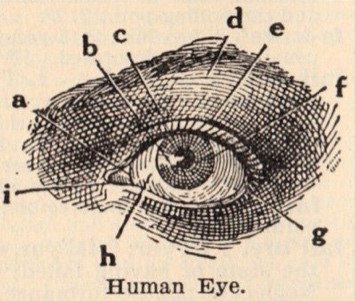
Refractions/Reflections: Victorian(ist) Ways of Seeing

October 22-23, 2021 — Charlotte, North Carolina 

(PDF version)

HINDSIGHT IS 20/20.

In The Stones of Venice (1851-1853), John Ruskin writes, “The greatest thing a human soul ever does in this world is to see something and tell what it saw in a plain way. Hundreds of people can talk for one who can think, but thousands can think for one who can see. To see clearly is poetry, prophecy and religion, all in one.” Ruskin pushed his contemporaries to see the world for themselves plainly. George Eliot echoes this idea in Adam Bede (1859), writing “all truth and beauty are to be attained by a humble and faithful study of [human] nature, and not by substituting vague forms, bred by imagination on the mists of feeling, in place of definite, substantial reality.” In contrast, other writers of the period reveled in creating imaginative, sensational, or fantastical worlds that moved beyond the boundaries of the seen and known. This conference seeks essays that explore how Victorians saw their world, how they depicted what they saw, and the ways that modern scholars, in turn, see the Victorians. Papers or panels on poetry, prose, nonfiction, biography, digital humanities, or visual art are welcome, as are presentations on the pedagogy and ethics of teaching Victorian literature in 2020-21.

Possible topics include:

  • Emotional, Intellectual, Aesthetic Insight
  • Visual Print Culture, Advertising, Ephemera
  • Visual Technology: Magic Lanterns, the Diorama, Binoculars, the Stereoscope
  • Optical Illusions/Literary Allusions
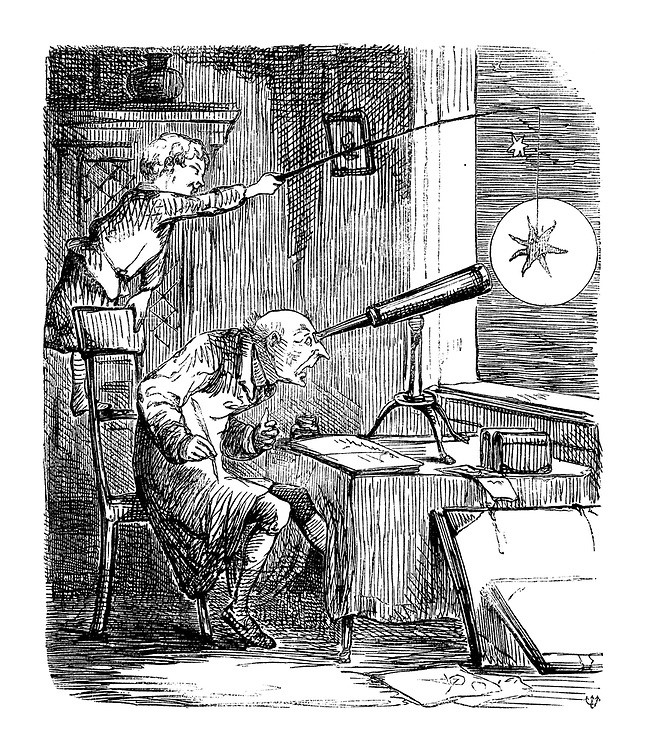
  • Observation & the (Scientific) Eye: Telescopes, Microscopes, Mirrors, Glasses
  • Victorian Photography/Illustration
  • The Imagination/The Mind’s Eye
  • Seeing Ghosts & Gothic Ways of Seeing
  • Seeing Disease/Illness/(Dis)ability
  • The Spectacle/Spectacular
  • The Great Exhibition
  • Shadows/Secrets/Surveillance
  • Mesmerists & Spiritualists
  • Performance/Performativity
  • Victorian Theater
  • The Visible/Invisible
  • Detectives/Detection, Criminals/Crime
  • Memoir/Memory/Retrospection
  • Fantasy & Reality
  • Travel & Travelogues
  • Pornography/Iconography
  • Food & its Presentation: the Home & the Restaurant
  • Self-Perception/Self-Construction
  • Victorian Landscapes & the Natural World
  • Art/Art Criticism/The Art Gallery
  • Medieval Revival & Revisions
  • Erasure & Censorship
  • Literal/Figurative Blindness
  • Objects/Objectification/the Other
  • Neo-Victorian/Modern Perceptions
  • Pedagogy: Victorians in the Age of #metoo
  • Pedagogy: Victorians in the Age of COVID

Please send a 300-word abstract and 1-page c.v. to the conference organizers at thevictoriansinstitute@gmail.com (Word or PDF format) by May 15th June 4th, 2021. Proposals should include contact information. Panel proposals should include contact information for all participants, a synopsis of the panel, and abstracts for all papers.

Confirmed Keynote Speaker: Dr. Amy M. King, St. John’s University

“Folded eyes see brighter colors than the open ever do.”

— Elizabeth Barrett Browning

Continue Reading

CFP for VI2019 conference in Charleston, SC

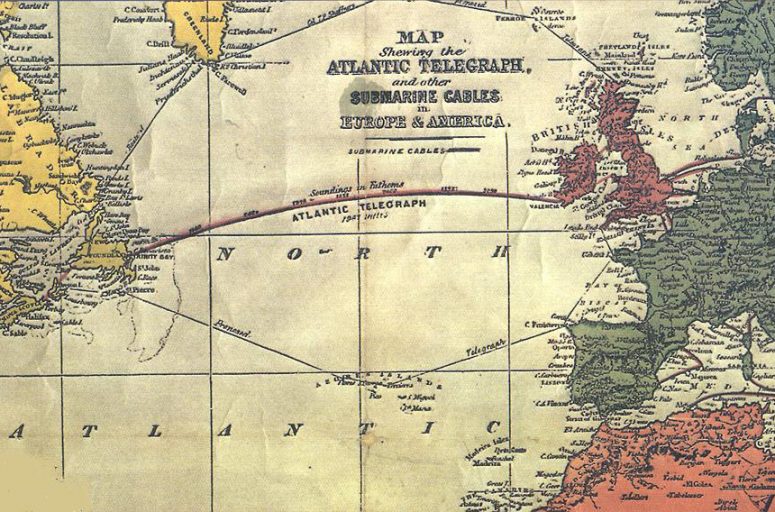
Transatlantic Cable Map

Please also see the conference website: https://vi2019.wordpress.com. The Victorians Institute is pleased to announce its 2019 conference and welcome abstracts on the topic of

Transatlantic Connections:
Africa, the Caribbean, the Americas, & Victorian Studies

To be held October 31 – November 2, 2019 in Charleston, SC. Our conference site affords an opportunity to think about transatlantic connections in the 19th century when Charleston was a prominent intersection on a web that connected Britain, Africa, the Caribbean, and the Americas.

We hope our conference will foster thinking about the many and various ways that Victorian literature and culture engages the Atlantic World. We invite essays and panels that investigate the diverse possibilities of our theme and, in keeping with it, encourage work that draws connections across the spaces that divide academic disciplines. Topics may include:

  • Emigration & Immigration
  • Slavery Abroad & at Home
  • Hybrid Languages, Cultures, & Peoples
  • Economic Affiliations & Rivalries
  • Culinary Connections
  • Ecologies, Climates, & Storms
  • Treasure Islands & Dark Continents
  • Pen Pals, Alliances, & Friendships
  • Travel Narratives
  • Romanticizing the Past
  • Envisioning the Future
  • Colonial Affairs
  • Technologies of Travel & Communication
  • Exploration & Adventure
  • Diasporas & Expatriates
  • The Body: Diseases, Infections & Antidotes
  • Copyrights & Piracy
  • Grand Tours & Lecture Tours
  • Victorians in Charleston
  • Trade Routes, Raw Materials, & Cash Crops

To apply, please submit a 250-300 word abstract of your paper. To propose a panel, please supply an abstract for each paper as well as a short description of the panel. Send all applications and questions to thevictoriansinstitute@gmail.com. Abstracts must be received by June 1st July 1st, 2019.

Continue Reading